





9

9

Magnetic clamping technology

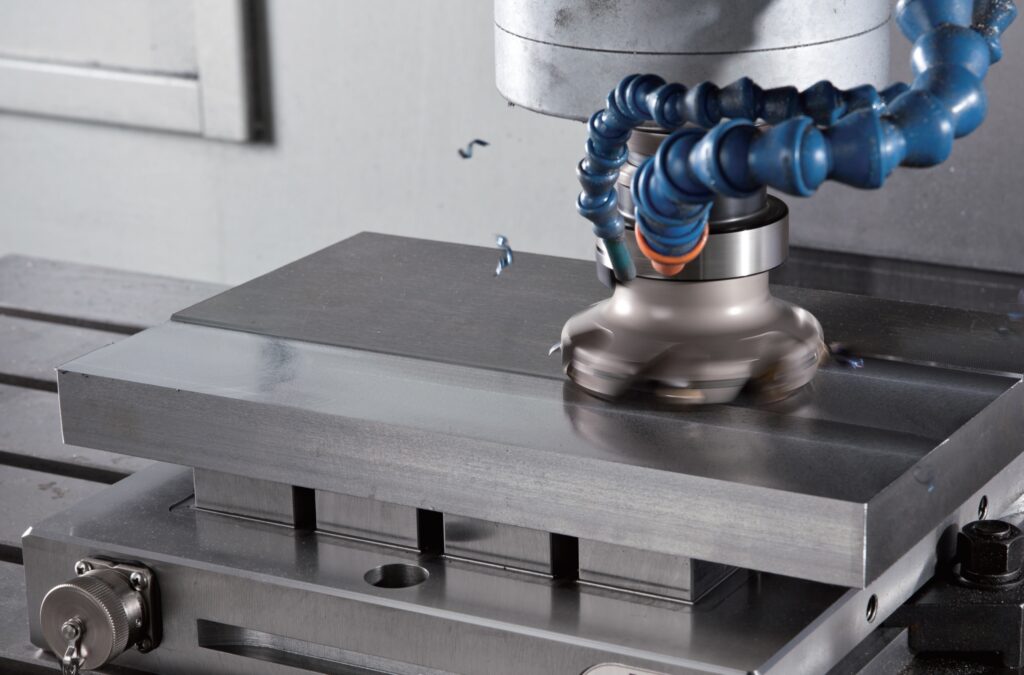
Magnetic clamping technology enables lightning-fast workpiece clamping without deformation.

Magnetic chucks are used in all areas of metalworking. Both thin, delicate and very large, heavy workpieces can be held securely in place with the various versions of magnetic chucks. The use of magnetic chucks is particularly beneficial when machining small batches, as the components/workpieces to be machined can be changed quickly.

SPREITZER offers permanent magnetic chucks, electro-magnetic chucks, electro-permanent magnetic chucks, round magnets, electromagnets –the right chuck for every requirement.

Magnetic clamping technology in metal processing

Magnetic clamping technology is used in grinding, milling, eroding and metrology . Magnetic clamping devices prove their worth every day thanks to their high precision and durability. The ability to clamp workpieces quickly and, above all, without distortion is one of the most important strengths of magnetic chucks.

Our magnetic chucks are suitable for use as milling magnets, grinding magnets or eroding magnets.

Advantages of magnetic clamping technology:

  • Clamping with short setup times
  • Flexible and universal
  • Large holding forces
  • High clamping forces
  • Adapted to the workpiece contour
  • Precise quality

Permanent magnetic chucks

Permanent magnetic clamping technology – The functional principle

Magnetization is achieved by mechanically shifting the internal poles (north/south) by turning the operating key. The magnets opposite the north and south poles are arranged in such a way that the magnetic flux lines are diverted across the surface. The result is the stepless generation of holding force.

The holding force of the magnetic chucks is very uniform, without magnetic dispersion.

SPREITZER offers rectangular and round permanent magnetic chucks

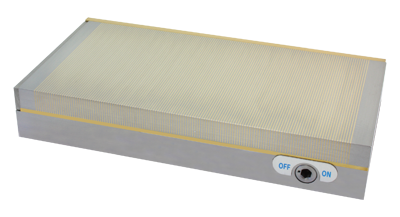
Rectangular permanent magnetic chucks.
Different versions and sizes available on request.
Our range includes permanent magnets with fine pole pitch for grinding and eroding work as well as permanent magnets with coarse pole pitch for milling.
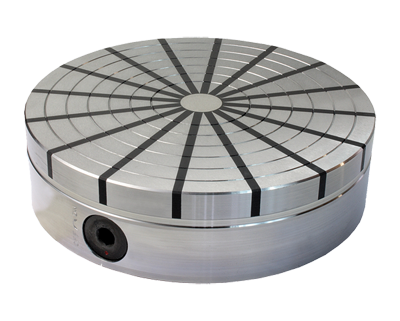
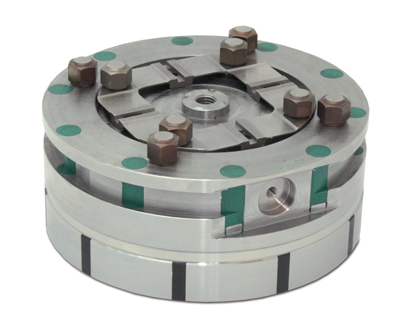
Round permanent magnetic chucks.
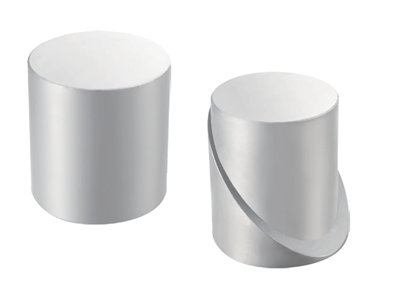
Round magnetic chucks, magnetic clamps with reinforced ceramic magnet system and max pole pitch are used for clamping bulky and heavy workpieces.
The magnetic force is infinitely variable, and centering grooves machined into the surface make it easier to align the workpiece.
Furthermore, a centering hole can be made in the surface if desired.

Strengths of permanent magnetic chucks:

  • Manually operated
  • Low magnetic field
  • No heat delay
  • Palletizable

Electro-permanent magnetic chucks

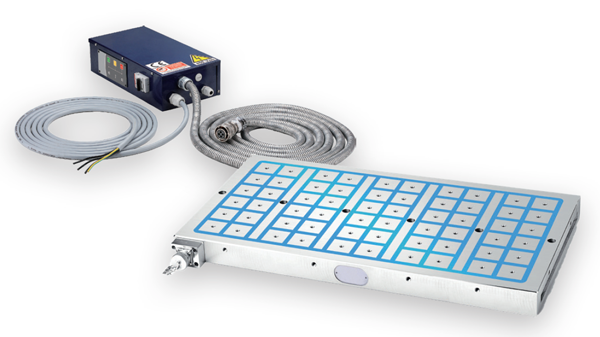
Different designs and sizes of electro-permanent magnetic chucks available on request.
The magnetic clamping plates require only a short current pulse for switching and can be used autonomously.
Without further energy consumption, without disturbing connections.

  • Force generation by current pulse
  • Force compound through one-time energy supply
  • No heat delay
  • Low residual magnetism
  • Extreme holding forces
  • Palletizable

Electro-permanent magnetic chucks with polar extensions

The functional principle

Mounting is carried out without tools using a threaded connection in the magnetic clamping plate. The nominal holding force is transferred to the workpiece through the pole extension. The fixed pole extension acts as a rigid support surface, while the movable pole extension compensates for potential workpiece irregularities of up to 6 mm.

Electro-permanent magnetic chucks with square pole technology, such as the SPQX electro-permanent magnetic chuck , can be extended with mobile and fixed pole extensions. They adapt to the workpiece and hold it securely. The individual contact points between the magnetic clamping plate and the workpiece can be defined individually. Pole extensions allow holes to be drilled through the workpiece without damaging the magnetic chuck. Thanks to the increased contact surface and maximum accessibility, even complex 5-axis machining operations can be carried out.

Electro-permanent magnetic clamping plates with pole extensions:

  • Evenly distributed magnetic force
  • Deformation-free clamping
  • Relining of uneven workpieces

Pole extensions

Fixed pole extensions

Movable pole extensions

Mobile and fixed pole extensions on the square pole clamping system allow clamping of wavy and warped metal parts.
They adapt to your workpiece and hold it securely.
The individual contact points between the magnetic chuck and the workpiece can be defined individually.
It is also possible to drill through and machine inner edges on magnetically clamped workpieces.

Additional pole extensions can be attached or interfering pole extensions removed in no time at all – so every workpiece has its own individual clamping device in no time at all.

For five-sided machining, the workpiece can be exposed with pole extensions.
Complex structures of workpieces that are difficult to clamp can be incorporated into the magnetically active surface via pole plates.

Our pole extensions are made of high-quality special steel and have the best magnetic flux properties – technically perfect and durable.

Palletizing magnetic chucks

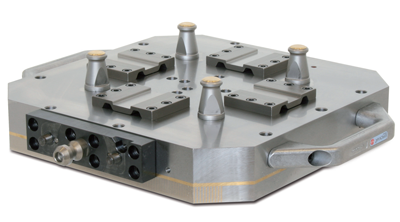
Round palletizing magnetic clamping plate

Automation has also become indispensable in mechanical processing.

To keep machine downtimes as short as possible, palletizing and zero-point clamping systems are used on eroding, milling and grinding machines.
This allows the user to clamp the workpiece already outside the machine, so that a stock of clamped workpieces can be created for the machining machine.

External clamping takes place on pallets, which can be picked up in the machine with repeat accuracy.
These pallets are then fed into the machine either manually or automatically.
The magnetic chucks described are suitable for use with palletizing systems from all manufacturers.

For the production of self-supporting magnetic pallets, the reference elements can also be installed directly in the magnetic clamping plate.
We also supply ready-to-use magnetic pallets equipped with original clamping and positioning elements for all systems.
For heavy-duty machining and large workpieces, we recommend electro-permanent square-pole technology in combination with UniLock-R zero-point clamping systems.

Sinusoidal

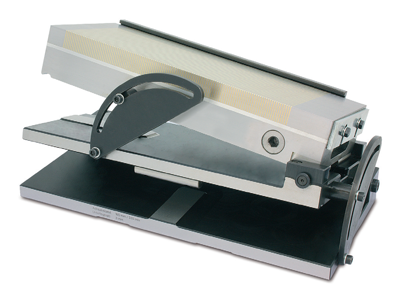
Sine tables with built-in magnetic plates are used to precisely machine angled surfaces on a wide variety of workpieces. Any angle can be set according to the sine principle with the aid of end masses. Sine tables are mainly used in tool and fixture construction, where an angular precision of 5 seconds is often required.
We offer a wide range of sine tables and are also happy to manufacture to your specifications with precision.

Lamella plates

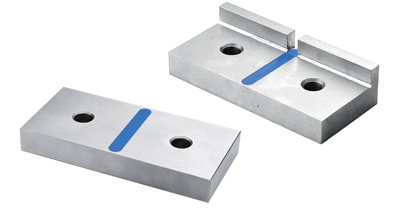
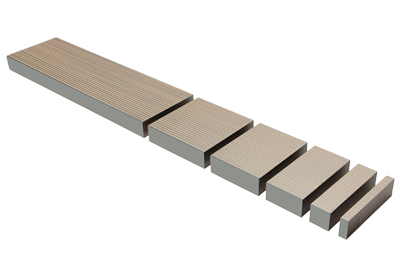
Laminar support plates and beams are used together with magnetic chucks. If parts can only be clamped with great difficulty or not at all on a magnetic clamping plate due to very low material thickness, three-dimensional structure or poor magnetic properties, lamella support plates offer various additional options. Pins can be inserted into lamella plates and contours can be incorporated, or they can be used as support surfaces, e.g. for T-shaped parts. Laminar support plates are simply placed or screwed onto the magnetic clamping plate. Unless otherwise specified, our support plates are silver brazed and can therefore be machined in any way.

Magnetic clamping blocks

Permanent magnetic clamping blocks have 2 or 3 magnetic clamping surfaces which cannot be switched. They are used to clamp very fine parts or materials that are difficult to magnetize, such as high-alloy chrome steel or carbide. After machining, the block with the clamped workpiece can be completely removed from the machine for testing purposes.
Clamping blocks are available in standard versions and in reinforced versions for heavy workpieces. Magnetic blocks are mainly used for grinding, measuring and wire cutting.

Magnetic clamping balls in top quality are used to hold parts in the optimum working position during laser welding, polishing and assembly. Depending on the workpiece geometry and weight, swivel angles of up to 90° can be set.

Pole reversal control unit

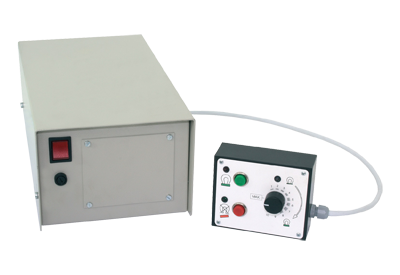
Electric magnetic chucks are operated on pole reversal control units.

These devices make it possible to regulate the holding force and demagnetize workpieces.
Pole reversal controllers can be supplied as panel-mounted or table-top units.
Attention should be paid to the voltage and power of the solenoid.

SPSG-TG pole reversal control units in a desktop housing are ideal for retrofitting electro-magnetic chucks . Installation requires minimal effort. The device is simply plugged into a 230V mains supply. Mains cable with safety plug and hand lever are included in the scope of delivery.

Load lifting magnets

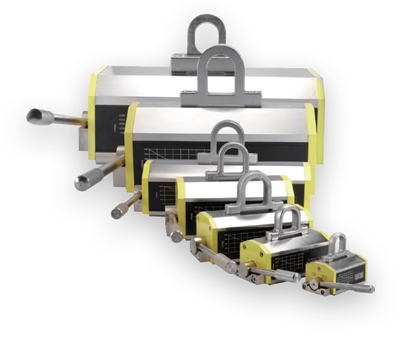
Permanent lifting magnet SPLM

Permanent load lifting magnets for lifting ferromagnetic material, bar material, cold-rolled.

The lifting magnets are available from a size of LxWxH 130 x 70 x 60 mm up to LxWxH 496 x 160 x 140 mm.

  • Safety factor of at least 3
  • Suitable for flat and round material
  • Maintenance-free construction
  • The safety interlock prevents unintentional switching off
  • On and off switch with one-hand operation

Welcher Magnettyp für welche Anwendung?

MagnettypHaltekraftStromverbrauchWärmeentwicklungTypische Anwendung
Permanentmagnetbis 80 N/cm²kein StromkeineSchleifen, Werkstattbetrieb, einfaches Fixieren
Elektromagnetbis 120 N/cm²kontinuierlichmerkbarFlachschleifen mit Kühlung, große Werkstücke
Elektropermanentbis 200 N/cm²nur Schaltimpulspraktisch keine5-Achs-Fräsen, Hochpräzision, ausfallsicher
Rundmagnet / Lasthebemagnetindividuellje nach Bauartje nach BauartDrehmaschinen, Werkstückhandling, Transport

Häufige Fragen zur Magnetspanntechnik

Was ist Magnetspanntechnik?
Magnetspanntechnik nutzt Permanentmagnete, Elektromagnete oder elektropermanente Magnete, um ferromagnetische Werkstücke (Stahl, Guss) auf einer Spannplatte zu fixieren — ohne Backen, Pratzen oder Verformung. Vorteil: Werkstück liegt vollflächig auf, ist von allen 5 Seiten zugänglich, und der Wechsel erfolgt in Sekunden.
Welche Werkstücke kann ich magnetisch spannen?
Ferromagnetische Werkstoffe: Stahl, Stahlguss, Grauguss, ferritischer Edelstahl. Mindestdicke je nach Magnetstärke ab ca. 4–8 mm. Nicht spannbar sind Aluminium, Kupfer, Messing, austenitische Edelstähle und Kunststoffe — hierfür sind Vakuum- oder mechanische Spanntechnik die richtige Wahl.
Worin unterscheiden sich Permanent-, Elektro- und Elektropermanent-Magnete?
Permanentmagnete sind immer aktiv und brauchen keinen Strom — aber das Werkstück muss manuell abgeschoben werden. Elektromagnete schalten per Strom ein/aus, brauchen kontinuierliche Stromzufuhr und erzeugen Wärme. Elektropermanente Magnete kombinieren beides: Sie schalten per kurzem Stromimpuls und halten dann ohne Strom — keine Wärme, kein Stromverbrauch, ausfallsicher.
Welche Spannkräfte erreicht Magnetspanntechnik?
Typische Haltekräfte liegen je nach Werkstück und Magnetsystem zwischen 80 N/cm² (Standard) und über 200 N/cm² (Hochleistungs-Elektropermanent). Eine Spannfläche von 200 × 100 mm entspricht damit ca. 16 kN bis über 40 kN Haltekraft.
Wird das Werkstück durch das Magnetfeld erwärmt?
Bei Permanent- und Elektropermanent-Systemen praktisch nicht. Elektromagnete erzeugen durch die Spule Wärme — das Werkstück kann sich um wenige Grad erwärmen. Für hochpräzise Bearbeitung sind Elektropermanent-Systeme daher die erste Wahl.
Bleiben Werkstücke nach dem Spannen magnetisiert?
Eine schwache Restmagnetisierung ist üblich. SPREITZER-Magnetspannplatten haben eine integrierte Entmagnetisierungsfunktion, die das Werkstück beim Lösen aktiv entmagnetisiert. Für sicherheitskritische Anwendungen empfehlen wir zusätzliche Entmagnetisierer.
Für welche Anwendungen ist Magnetspanntechnik typisch?
Klassisch: Flachschleifen (oberste Wahl), Profilschleifen, Erodieren (EDM), 5-Achs-Fräsen flacher Werkstücke, Drahterodieren, Plattenbearbeitung, Lohnfertigung. Vorteil bei Schleifprozessen: Werkstück lässt sich auch mit dünnster Aufspannhöhe bearbeiten.
Spreitzer Rottweil Telefonhörer Icon

What can we do for you?

By using our products and services, our customers increase the productivity of their production by up to 100 % and at the same time significantly reduce their production costs.