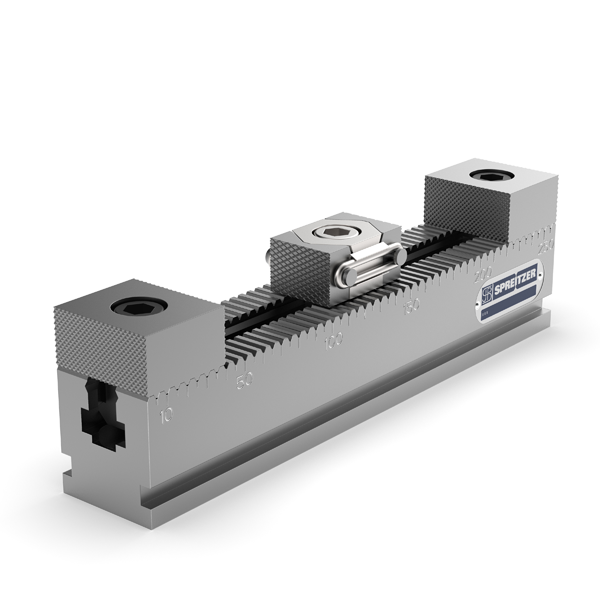




- Machining several workpieces or sides in a single set-up increases productivity.
- Less re-clamping means fewer sources of error and higher accuracy.
- The basis for efficient series and automated production.
What do multi-sided machining and multiple clamping mean?
In multi-sided machining, several sides of a workpiece are machined in one set-up; in multiple clamping, several workpieces are machined at the same time. Both reduce set-up and non-productive times.
What are the benefits?
- Higher productivity: more machining per set-up.
- Better accuracy: less re-clamping, fewer set-up errors.
- Automation-ready: ideal for pallet and multi-machine operation.
Requirements
Good accessibility of the machining areas is important, as are workholding devices that hold several workpieces in a defined and reproducible manner — such as self-centering vises or zero-point clamping systems.
Frequently asked questions
What is the difference between multi-sided machining and multiple clamping?
Multi-sided machining processes several sides of a workpiece in one set-up; multiple clamping processes several workpieces simultaneously. Both reduce set-up and non-productive times.
Why does less re-clamping increase accuracy?
Every re-clamping operation is a potential source of error. If more machining is done in one set-up, set-up errors are eliminated and dimensional accuracy increases.