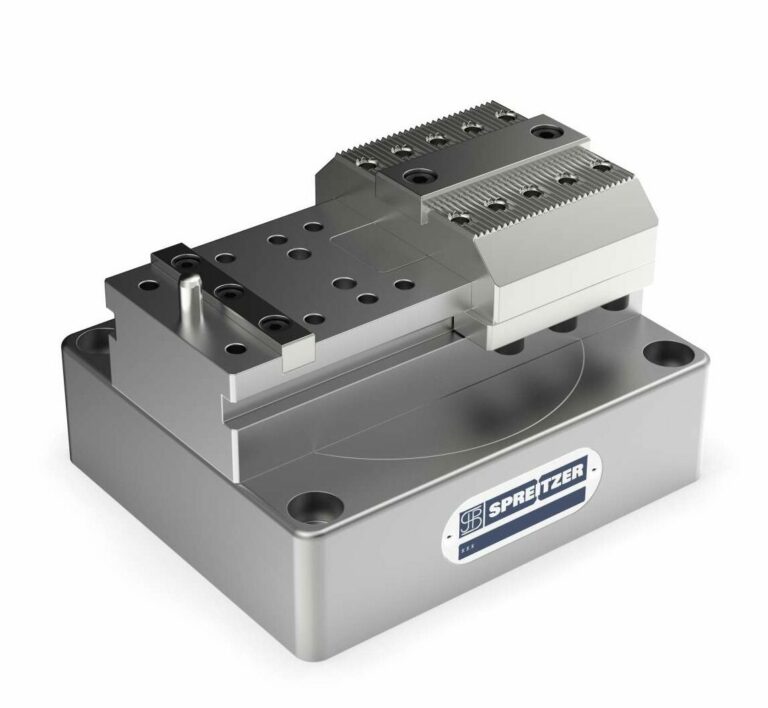




- Too little clamping force: the workpiece moves — a safety and quality risk.
- Too much clamping force: distortion of or damage to the workpiece.
- The right clamping force balances process reliability and protection of the workpiece.
Why clamping force is crucial
The clamping force must hold the workpiece securely against the machining forces — but no more than necessary. The right balance determines process reliability, dimensional accuracy, and protection of the workpiece.
Consequences of incorrect clamping force
Too little clamping force
The workpiece can shift or come loose — causing scrap and a safety risk.
Too much clamping force
Thin-walled or sensitive workpieces deform; after unclamping, they spring back and are no longer dimensionally accurate.
Influencing factors
- Machining forces (cutting forces, feed)
- Material and rigidity of the workpiece
- Support surface and contact surface of the clamping elements
- Geometry and wall thickness
In practice
As much clamping force as necessary, as little as possible. Defined, controllable clamping systems — such as electromechanical ones — allow reproducible, gentle clamping.
Frequently asked questions
What happens if the clamping force is too high?
Thin-walled or sensitive workpieces deform; after unclamping, they spring back and lose their dimensional accuracy.
How do you find the right clamping force?
It depends on the machining forces, material, geometry, and contact surface. Rule of thumb: as much as necessary, as little as possible — ideally with clamping systems that can be controlled in a defined way.